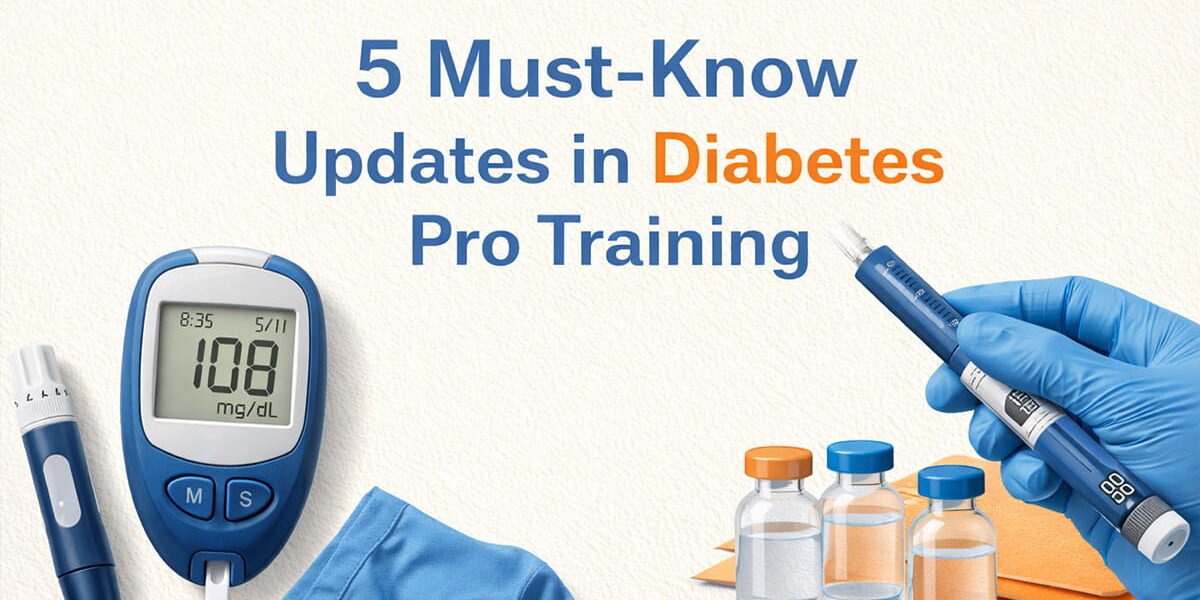
The landscape of diabetes management is moving at breakneck speed. As we move through 2026, the American Diabetes Association (ADA) and the International Diabetes Federation (IDF) have shifted the focus from simple blood sugar control to a holistic, “technology-first” approach.
For healthcare professionals and advanced caregivers, staying current isn’t just about credits—it’s about mastering the tools that are fundamentally changing patient outcomes. Here are the five most critical updates currently defining professional diabetes training.
1. The “AID-First” Protocol for All Insulin Users
In previous years, Automated Insulin Delivery (AID) systems—often called “closed-loop” systems—were reserved for Type 1 patients who struggled with stability.
The 2026 Shift: Professional standards now recommend AID as the preferred delivery method for anyone on intensive insulin therapy, including those with Type 2.
The Pro Advantage: Training now focuses on “de-prescribing” the constant mental math of carb counting.
Key Skill: Learning to manage “Open-Source” AID (like Loop or AndroidAPS). These patient-led innovations are now clinically recognized, and professionals must know how to support users who choose these transparent, community-driven algorithms.
2. CGM Beyond the Needle: Monitoring for Non-Insulin Users
Continuous Glucose Monitoring (CGM) is no longer just for those at risk of “crashing.” The latest professional training emphasizes CGM use for patients with Type 2 diabetes who are not on insulin, and even those with prediabetes.
Behavioral Feedback: Professionals are using CGM data as a “biometric mirror.” Seeing a real-time spike after a specific meal is a more powerful educational tool than a three-month-old HbA1c result.
Early Intervention: Training now highlights using CGMs at the moment of diagnosis to prevent the “therapeutic inertia” that often keeps patients on sub-optimal treatments for years.
3. The Rise of Multi-Condition Pharmacotherapy (GLP-1s & Beyond)
The “Pro” approach in 2026 has moved away from treating diabetes in a silo. Diabetes training is now heavily integrated with Cardiometabolic Health.
Medication Class
Primary Function
2026 Pro Update
GLP-1 / GIP Dual Agonists
Glucose & Weight
Now a first-line recommendation for MASLD (liver disease) and Heart Failure (HFpEF).
Oral Semaglutide
Weight Management
The 2026 approval of high-dose oral versions has shifted training toward “pill-first” weight loss strategies.
SGLT2 Inhibitors
Kidney Protection
Now standard “renal-protective” therapy, regardless of A1c levels.
4. T1D Staging and Preventative Immunotherapy
We are officially in the era of “Delaying Diabetes.” Professional training now includes protocols for Stage 1 and Stage 2 Type 1 Diabetes.
Autoantibody Screening: Pros are being trained to identify the presence of islet autoantibodies before symptoms appear.
Immunotherapy: With the success of drugs like Teplizumab, training focuses on the 14-day infusion protocols that can delay the onset of clinical T1D by years. This turns the “unavoidable” diagnosis into a manageable timeline.
5. Person-Centered Nutrition: Ending the “Carb Phobia”
The 2026 ADA Standards have moved further away from “one-size-fits-all” diets. The new professional strategy is Evidence-Based Flexibility.
Mediterranean and Plant-Based focus: Training now emphasizes these patterns for their cardiovascular benefits, rather than just their glycemic index.
Cultural Competency: Pros are taught to adapt nutrition plans to a patient’s cultural heritage. Instead of telling a patient to stop eating rice or tortillas, training focuses on “starch sequencing” (eating fiber and protein first) to blunt the glucose response.
Lean Mass Preservation: As more patients use potent weight-loss medications, professionals are being trained to prioritize high-protein intake (at least 0.8g/kg/day) to ensure that weight loss comes from fat, not muscle.
Dr. Sunil Saini is a distinguished orthopedic surgeon with expertise in cosmetic limb lengthening, deformity correction, and Ilizarov surgery. With a career spanning over two decades, he has made significant contributions to the field of orthopedics, particularly in advanced limb lengthening techniques.