As we step into 2026, the global healthcare sector is undergoing a radical shift. The demand isn’t just for “degree holders” anymore; it is for professionals who are day-one ready. While traditional medical and paramedical colleges rely heavily on classroom lectures and simulated environments, a new gold standard has emerged: Hospital-Integrated Learning.
At Global A1 Institutes (GHI), we believe that a student’s education shouldn’t happen in a vacuum. By housing our educational programs within the campus of our own multispecialty Global Hospital & Trauma Centre, we provide an immersive ecosystem that a standalone college simply cannot replicate.
The Reality Check: Why Simulation Labs Aren’t Enough
Simulation labs—complete with high-fidelity manikins that can “breathe,” “bleed,” and “speak”—are incredible tools. They provide a safe space to make mistakes and build muscle memory. However, even the most advanced robot has a major limitation: it lacks a soul.
A manikin doesn’t have a concerned family member standing in the hallway. It doesn’t have an unpredictable “white coat” anxiety spike or a complex medical history that it “forgot” to mention. In a simulation, the environment is controlled. In a hospital, the environment is dynamic.
By moving beyond the simulation lab and into the actual wards, GHI students learn the “soft” skills that are actually the “core” skills of medicine:
Empathy & Communication: Learning how to explain a procedure to a real, nervous patient.
Adaptability: Responding to a sudden change in a patient’s vitals that wasn’t “pre-programmed” by a professor.
Professional Etiquette: Navigating the real-world hierarchy of a multidisciplinary team of doctors, nurses, and technicians.
The GHI Advantage: The Power of an On-Campus Multispecialty Hospital
Having a multispecialty hospital on the same campus as the classroom transforms “learning” into “doing.” At Global A1, students don’t just read about Cardiology, Orthopedics, or Critical Care; they walk across the corridor to see them in action.
1. Real-Time Case Studies
When a complex trauma case arrives at the Global Trauma Centre, it becomes a living lesson. Our students can observe the stabilization process, the diagnostic imaging, and the surgical intervention in real-time. This continuity of care—seeing a patient move from the ER to the OT to Recovery—provides a holistic understanding of healthcare that textbooks can’t convey.
2. Mastering High-End Technology
Traditional colleges often use outdated equipment for practice. Because our students are integrated into a working hospital, they train on the actual diagnostic tools used in 2026—advanced CT scanners, automated hematology analyzers, and modern ventilators. When they graduate, they aren’t “learning the ropes” at their first job; they are already masters of the machinery.
3. Mentorship by Practicing Specialists
Our faculty isn’t just composed of academics; they are the same doctors and surgeons who are treating patients daily. Learning about Infection Control from a nurse who just managed a critical ward or learning Anatomy from a surgeon who just performed an appendectomy gives students a “practitioner’s perspective” that is invaluable.
In the 2026 job market, “onboarding time” is a major cost for hospitals. If a hospital hires a graduate who has never interacted with a real patient, they must spend months training them on basic clinical conduct.
Global A1 graduates have zero onboarding lag. Because they have been interacting with patients, doctors, and real clinical systems from day one, they are seen as “Seasoned Freshers.” They understand hospital workflows, they are comfortable in high-pressure environments, and they possess the professional maturity that only comes from real-world exposure.
Conclusion: The Education of the Future
The future of medical education isn’t found in a quiet library; it’s found in the rhythmic beep of a heart monitor and the coordinated hustle of a trauma bay. Hospital-Integrated Learning is the only way to bridge the gap between “knowing” and “doing.”
At Global A1 Institutes, we are proud to lead this revolution. We don’t just teach medicine; we live it. By choosing a campus with an active multispecialty hospital, you are giving your career a competitive edge that will last a lifetime.
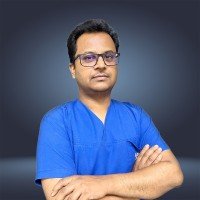
Dr. Sunil Saini is a distinguished orthopedic surgeon with expertise in cosmetic limb lengthening, deformity correction, and Ilizarov surgery. With a career spanning over two decades, he has made significant contributions to the field of orthopedics, particularly in advanced limb lengthening techniques.