

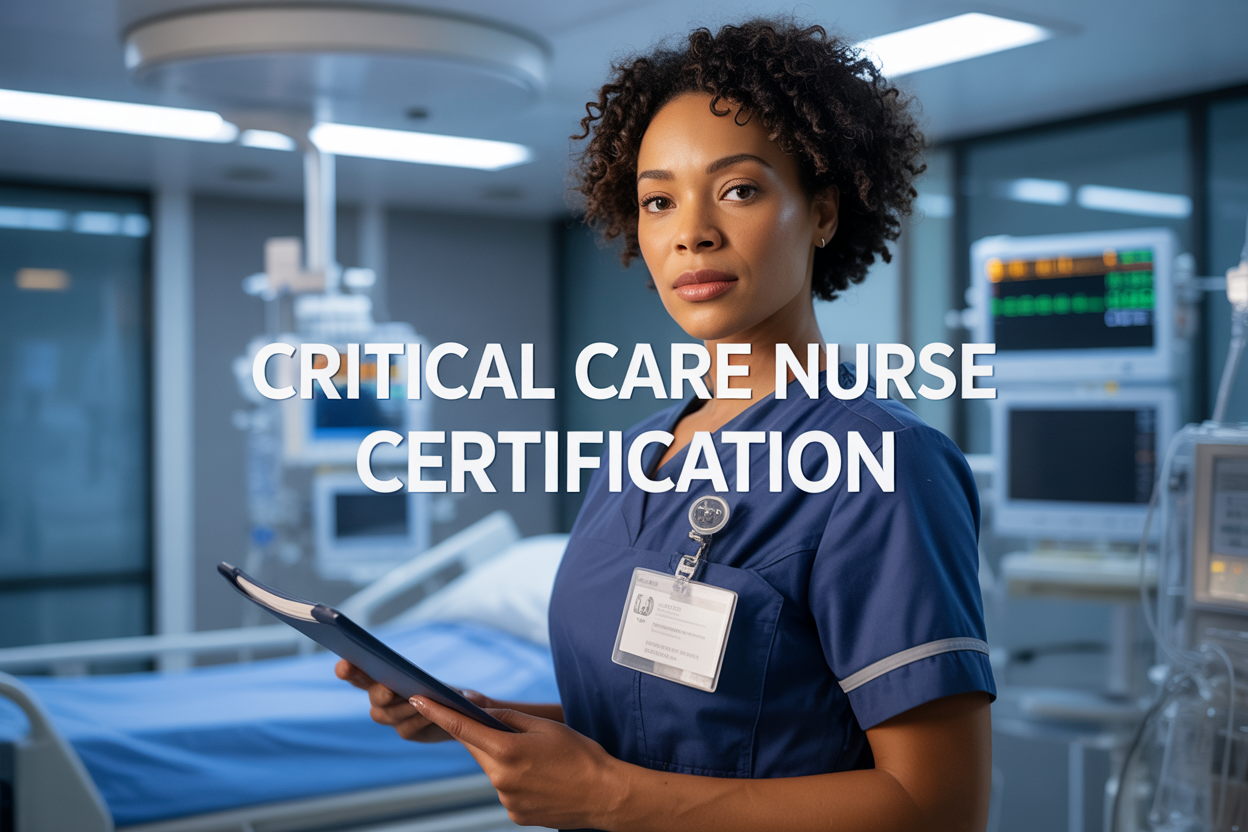
A critical care nurse certification can transform your nursing career by opening doors to specialized roles and higher salaries. This guide is designed for registered nurses working in or aspiring to join intensive care units, emergency departments, and other high-acuity settings.
Getting certified shows employers you have the advanced skills needed to care for critically ill patients. It sets you apart from other nurses and gives you credibility in demanding healthcare environments.
We’ll explore the key benefits of earning your critical care nurse certification and walk through the qualifications you need to get started. You’ll also discover the career advancement opportunities that become available once you’re certified and learn how to maintain your credentials through continuing education.
Understanding Critical Care Nurse Certification Benefits

Higher Salary Potential and Financial Rewards
Critical care certification typically boosts annual earnings by $5,000-$15,000, with certified nurses earning 10-20% more than non-certified colleagues. Specialized units offer premium pay differentials, shift bonuses, and enhanced overtime rates. Many employers provide certification bonuses and salary bumps upon completion.
Enhanced Job Security and Market Demand
Healthcare systems actively recruit certified critical care nurses due to rising patient acuity and specialized unit expansion. Certification creates competitive advantages during layoffs and restructuring. The aging population drives continuous demand for intensive care services, making certified nurses virtually recession-proof assets.
Increased Professional Recognition and Credibility
Certification validates expertise and commitment to excellence, earning respect from physicians, administrators, and peers. Certified nurses gain credibility when mentoring staff, participating in quality committees, and leading practice improvements. Professional recognition opens doors to speaking engagements, research opportunities, and leadership roles.
Expanded Career Opportunities in Specialized Units
Certification unlocks positions in cardiac catheterization labs, trauma centers, surgical ICUs, and specialty transport teams. Many facilities require certification for charge nurse, educator, and clinical specialist roles. Advanced opportunities include travel nursing, per diem work, and consulting positions across diverse healthcare settings.
Essential Qualifications and Prerequisites

Required Nursing Experience and Clinical Hours
Most critical care certifications demand at least two years of direct bedside experience in intensive care units, with a minimum of 1,750 clinical hours. This hands-on experience ensures you’ve encountered complex patient scenarios, ventilator management, and life-support systems that form the foundation of critical care expertise.
Educational Background and Degree Requirements
You need an active RN license backed by either an Associate Degree in Nursing (ADN) or Bachelor of Science in Nursing (BSN) from an accredited program. While some certifications accept ADN graduates, many healthcare systems now prefer BSN-prepared nurses for critical care positions, making the bachelor’s degree increasingly valuable for career advancement.
Current License and Good Standing Status
Your nursing license must remain current and unrestricted across all jurisdictions where you practice. This means no disciplinary actions, suspensions, or probationary status that could impact your professional standing. Certification boards conduct thorough background checks and require documentation proving your license remains in good standing throughout the application process.
Career Advancement Opportunities After Certification

Leadership Roles in ICU and Critical Care Units
Critical care certification opens doors to charge nurse positions, unit management roles, and clinical supervisor opportunities. Certified nurses demonstrate the advanced competency hospitals seek for leading high-acuity departments. These leadership positions come with increased responsibilities for staff development, quality improvement initiatives, and patient safety protocols. Many facilities prioritize certified nurses for promotion to assistant nurse manager or nurse manager positions, recognizing their specialized expertise in managing complex patient populations and crisis situations.
Clinical Educator and Preceptor Positions
Healthcare organizations actively recruit certified critical care nurses to mentor new graduates and orient experienced nurses transitioning into intensive care. These educational roles involve developing training programs, conducting skills assessments, and ensuring competency standards across critical care units. Clinical educator positions often come with dedicated time for curriculum development and teaching responsibilities. Many certified nurses find these roles rewarding as they shape the next generation of critical care professionals while advancing their own careers in nursing education and professional development.
Travel Nursing and Higher-Paying Assignments
Certification significantly boosts earning potential in travel nursing assignments and per diem positions. Travel agencies prioritize certified nurses for premium placements in top-tier medical centers and specialty hospitals. Critical care certification commands higher hourly rates, often $5-15 more per hour than non-certified positions. These assignments provide exposure to different hospital systems, advanced technologies, and diverse patient populations. The combination of certification and travel experience creates valuable networking opportunities and broadens clinical expertise across various healthcare environments.
Specialization in Cardiac, Trauma, or Surgical Critical Care
Certification serves as a foundation for pursuing subspecialty areas within critical care nursing. Cardiac critical care units, trauma centers, and surgical ICUs often require additional specialized training beyond basic critical care certification. These specialized roles involve managing patients with specific conditions like post-cardiac surgery recovery, multi-trauma injuries, or complex surgical complications. Subspecialty positions typically offer higher compensation and greater autonomy in clinical decision-making. Many nurses use their initial critical care certification as a stepping stone toward advanced certifications in areas like cardiac surgery, neurocritical care, or pediatric intensive care.
Maintaining Certification and Continuing Education Requirements

- [ ]
Renewal Timeline and Continuing Education Credits
Most critical care nursing certifications require renewal every three years, with nurses needing to complete 100-150 continuing education units during this period. The American Association of Critical-Care Nurses (AACN) requires 144 CERPs (continuing education recognition points) for CCRN renewal, with specific requirements for clinical practice hours. Nurses can earn credits through workshops, conferences, online courses, and professional presentations. Many employers offer tuition reimbursement or paid time off for certification-related education, making it easier to meet these requirements while advancing your expertise.
Professional Development and Skill Enhancement
Critical care nurses can pursue specialized certifications in areas like cardiac surgery, neurocritical care, or pediatric intensive care to expand their scope of practice. Leadership development programs, mentorship opportunities, and advanced clinical skills training help nurses move into charge positions, clinical educator roles, or nurse practitioner tracks. Professional memberships in organizations like AACN provide access to cutting-edge research, networking events, and career resources that accelerate professional growth and open doors to new opportunities.
Staying Current with Critical Care Best Practices
The fast-paced world of critical care demands constant learning to keep up with new technologies, treatment protocols, and evidence-based practices. Regular participation in journal clubs, grand rounds, and multidisciplinary team meetings helps nurses stay informed about the latest developments. Following professional journals like Critical Care Medicine and American Journal of Critical Care ensures access to current research. Many hospitals provide simulation training and competency assessments that help nurses practice new skills in a safe environment before applying them in patient care.