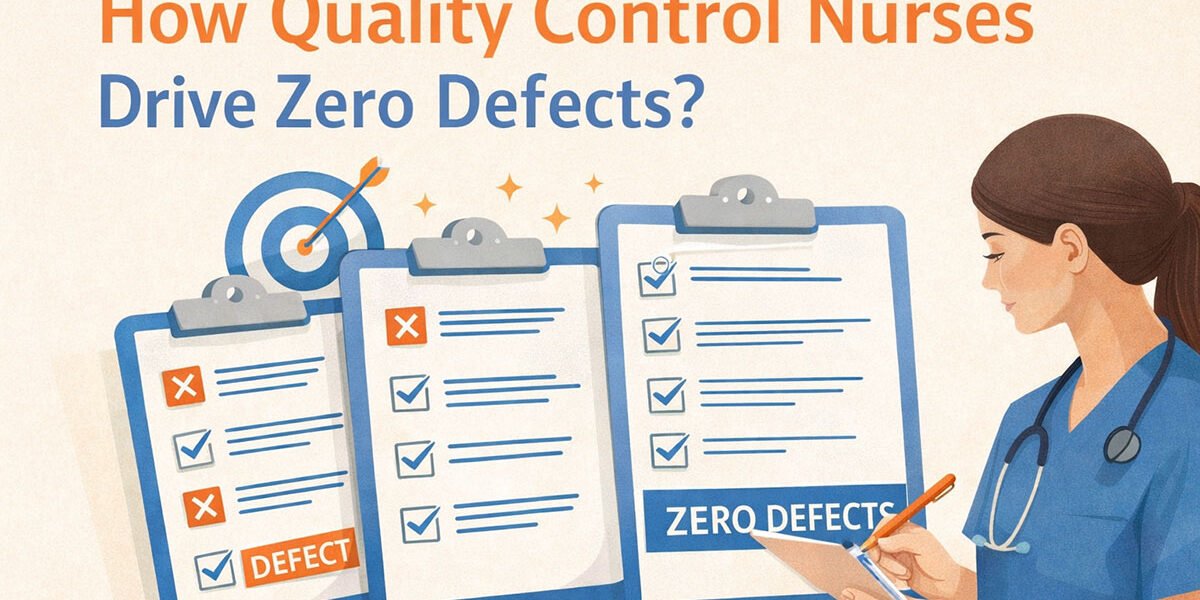
Quality control nurses are the unsung heroes who make sure patients get safe, error-free care every single time. These specialized healthcare professionals work behind the scenes to catch problems before they happen, review processes that could go wrong, and create systems that protect patients from medical mistakes.
This guide is for healthcare administrators, nursing leaders, and quality improvement teams who want to understand how quality control nurses drive zero defects in patient care. Whether you’re looking to strengthen your current quality programs or build new ones from scratch, you’ll learn practical strategies that work.
We’ll explore how quality control nurses use systematic monitoring techniques to spot potential issues early, and dive into the collaborative approaches they use to get entire healthcare teams working together toward the same goal of perfect patient outcomes. You’ll also discover the specific metrics these professionals track to measure success and prove their impact on patient safety.
Essential Role of Quality Control Nurses in Healthcare Excellence
Specialized Expertise in Patient Safety Protocols
Quality control nurses master complex safety frameworks that protect patients from preventable harm. They understand medication reconciliation processes, infection control standards, and fall prevention strategies. These professionals identify risk factors before incidents occur, implementing evidence-based protocols that create multiple safety barriers. Their specialized training in root cause analysis helps them spot system vulnerabilities that other staff might miss.
Advanced Clinical Assessment Skills for Error Prevention
These nurses possess refined assessment abilities that catch early warning signs of patient deterioration. They recognize subtle changes in vital signs, medication responses, and patient behavior that signal potential complications. Their systematic approach to patient evaluation includes comprehensive documentation and trending analysis. They use clinical judgment to escalate concerns appropriately and prevent adverse events through proactive intervention.
Leadership in Quality Improvement Initiatives
Quality control nurses champion improvement projects that transform healthcare delivery. They analyze data trends, identify areas for enhancement, and lead multidisciplinary teams in implementing solutions. These professionals facilitate training programs, develop new policies, and measure outcomes to ensure sustainable change. Their leadership extends beyond individual units to organization-wide initiatives that elevate care standards across all departments.
Strategic Positioning Within Healthcare Teams
These nurses occupy critical positions that bridge clinical care and administrative oversight. They collaborate with physicians, administrators, and support staff to align quality goals with daily operations. Their strategic perspective helps teams understand how individual actions impact overall patient outcomes. They serve as quality advocates, ensuring that excellence remains the top priority while maintaining efficient workflows and resource utilization.
Core Quality Control Systems That Eliminate Medical Errors
Comprehensive Patient Monitoring Protocols
Quality control nurses implement systematic monitoring frameworks that track vital signs, neurological assessments, and pain levels at predetermined intervals. These protocols include standardized observation checklists, early warning scoring systems, and escalation pathways that trigger immediate intervention when patient parameters deviate from established baselines, preventing adverse events before they occur.
Medication Administration Verification Processes
The five rights of medication administration—right patient, drug, dose, route, and time—form the foundation of error prevention strategies. Nurses employ barcode scanning technology, double-verification procedures, and standardized reconciliation processes during patient transfers. Independent verification by two qualified personnel becomes mandatory for high-risk medications like chemotherapy agents and anticoagulants.
Documentation Accuracy Standards
Accurate record-keeping requires real-time documentation practices that eliminate delays between care delivery and charting. Quality control systems mandate specific documentation timeframes, require complete assessment data entry, and include audit trails for all modifications. Electronic health records feature built-in validation checks that prevent incomplete entries and flag missing critical information.
Infection Control Compliance Measures
Stringent infection prevention protocols include hand hygiene monitoring systems, isolation precaution adherence, and environmental cleaning verification. Nurses conduct regular compliance audits using standardized checklists, monitor healthcare-associated infection rates, and implement corrective actions when breaches occur. Personal protective equipment protocols receive continuous reinforcement through competency assessments and peer observation programs.
Equipment Safety Validation Procedures
Medical device safety requires systematic inspection schedules, preventive maintenance tracking, and user competency verification. Quality control nurses validate proper equipment calibration, ensure emergency backup systems function correctly, and maintain detailed logs of device performance. Regular safety rounds identify potential hazards, while incident reporting systems capture near-miss events for proactive risk reduction.
Advanced Monitoring Techniques for Zero-Defect Patient Care
Real-time patient data analysis and interpretation
Quality control nurses leverage advanced analytics platforms to process patient data streams continuously, identifying subtle pattern changes that might signal deterioration. These systems integrate multiple data points – from laboratory results to medication responses – creating comprehensive patient profiles that enable immediate intervention decisions. Smart algorithms flag anomalies instantly, allowing nurses to respond before complications develop.
Predictive risk assessment methodologies
Machine learning models analyze historical patient data to calculate risk scores for various complications, from falls to sepsis onset. Nurses use these predictive tools to stratify patients based on vulnerability levels, allocating resources proactively rather than reactively. Risk stratification protocols help teams focus intensive monitoring on high-risk patients while maintaining standard care for stable cases.
Continuous vital sign surveillance systems
Wireless monitoring devices track patient vitals around the clock, transmitting data directly to nursing stations and mobile devices. These systems eliminate manual documentation errors while providing uninterrupted surveillance coverage. Advanced sensors detect minute changes in heart rate variability, respiratory patterns, and oxygen saturation that human observation might miss during routine checks.
Early warning system implementation
Automated alert systems combine multiple physiological parameters to generate early warning scores that trigger escalation protocols. These systems notify appropriate team members when patients show signs of clinical deterioration, ensuring rapid response team activation. Customizable thresholds allow nurses to adjust sensitivity levels based on individual patient conditions and unit-specific protocols, reducing false alarms while maintaining safety margins.
Collaborative Strategies That Strengthen Healthcare Quality
Cross-functional team communication protocols
Effective communication protocols break down silos between departments and create seamless information flow. Standardized handoff procedures ensure critical patient data transfers accurately between shifts and units. Regular huddles bring together nurses, physicians, pharmacists, and therapists to discuss patient concerns and coordinate care plans. Digital communication platforms enable real-time updates and reduce miscommunication risks that lead to medical errors.
Physician-nurse partnership in quality assurance
Strong physician-nurse partnerships form the backbone of quality healthcare delivery. Nurses provide continuous patient monitoring insights while physicians make diagnostic decisions, creating a comprehensive care approach. Joint bedside rounds allow both professionals to assess patient progress together and identify potential safety concerns early. Collaborative documentation systems ensure both perspectives are captured, reducing gaps in care that could compromise patient outcomes.
Patient and family engagement in safety processes
Active patient and family participation creates an additional safety net in healthcare delivery. Bedside safety checklists involve patients in verifying their identity, medications, and procedure details before treatment begins. Family members serve as advocates who can identify changes in patient condition that clinical staff might miss. Educational programs teach patients to speak up about concerns and participate in their care decisions, creating a culture where safety becomes everyone’s responsibility.
Interdisciplinary quality review meetings
Regular interdisciplinary meetings analyze quality metrics and identify improvement opportunities across all care areas. These sessions bring together nurses, physicians, administrators, and support staff to review incident reports and near-miss events. Root cause analysis discussions help teams understand why errors occur and develop preventive strategies. Action plans created during these meetings are tracked and monitored to ensure sustainable quality improvements throughout the organization.
Technology Integration for Enhanced Quality Outcomes
Electronic Health Record Optimization for Error Reduction
Modern EHRs serve as the backbone of error prevention through built-in validation rules, drug interaction alerts, and clinical decision support tools. Smart templates guide nurses through standardized care protocols while automated checks catch potential mistakes before they reach patients. Advanced EHR systems integrate with laboratory results, medication administration records, and vital sign monitoring to create seamless workflows that eliminate transcription errors and ensure accurate documentation across all care touchpoints.
Automated Alert Systems for Critical Patient Changes
Intelligent monitoring platforms continuously analyze patient data streams, triggering immediate notifications when parameters fall outside safe ranges. These systems use predictive algorithms to identify early warning signs of deterioration, automatically alerting quality control nurses through multiple channels including mobile devices, workstation pop-ups, and overhead paging systems. Critical alerts for sepsis indicators, cardiac events, and medication reactions enable rapid response interventions that prevent adverse outcomes through timely clinical action.
Digital Quality Metrics Tracking and Reporting
Real-time dashboards provide instant visibility into quality indicators including infection rates, medication errors, patient satisfaction scores, and compliance metrics. Interactive analytics platforms allow nurses to drill down into specific data points, identify trends, and correlate quality outcomes with staffing patterns, patient acuity levels, and intervention timing. Automated reporting generates regulatory submissions while providing actionable insights that drive continuous improvement initiatives and benchmark performance against industry standards.
Mobile Technology for Real-Time Quality Monitoring
Smartphone and tablet applications enable bedside quality assessments, instant photo documentation of wounds or equipment issues, and immediate access to protocols and reference materials. Mobile barcode scanning verifies patient identity, medication accuracy, and equipment calibration while capturing data directly into quality management systems. Push notifications deliver critical updates about policy changes, quality alerts, and patient-specific care reminders, ensuring nurses stay connected to quality initiatives regardless of their physical location within the healthcare facility.
Role of Quality Control Nurses in Achieving Zero Defects
At Global A1 Institute, Quality Control Nurses are trained to play a critical role in achieving Zero Defects in healthcare delivery by focusing on prevention rather than correction. Through structured training and real-world case studies, nurses learn how to identify risks before they turn into errors.
Key responsibilities include:
Monitoring adherence to clinical protocols and SOPs
Ensuring infection control and patient safety standards
Identifying non-conformities and root causes of errors
Implementing corrective and preventive actions (CAPA)
Supporting continuous quality improvement and accreditation goals
By strengthening systems, processes, and accountability, Quality Control Nurses help hospitals reduce errors, improve outcomes, and build a culture of safety—moving closer to the goal of Zero Defects.
Measuring Success Through Quality Control Metrics
Patient safety indicator benchmarking
Healthcare organizations track specific metrics like infection rates, medication errors, and patient falls to compare performance against national standards. Quality control nurses monitor these indicators daily, identifying trends and implementing corrective actions when benchmarks aren’t met. Standard metrics include central line-associated bloodstream infections (CLABSI), catheter-associated urinary tract infections (CAUTI), and surgical site infections, with targets typically set at zero occurrences for preventable events.
Error rate reduction tracking systems
Robust tracking systems capture near-misses, adverse events, and medication discrepancies through electronic reporting platforms. These systems generate real-time dashboards showing error frequency, severity levels, and root causes across different units. Quality control nurses analyze patterns weekly, focusing on high-risk areas like intensive care units and emergency departments where error rates traditionally spike due to complex patient conditions and time pressures.
Patient satisfaction correlation with quality measures
Patient satisfaction scores directly correlate with clinical quality indicators, creating measurable links between care delivery and patient experience. Quality control nurses examine HCAHPS scores alongside safety metrics, identifying relationships between communication effectiveness, pain management, and overall satisfaction ratings. This data reveals how quality improvements translate into patient perception, with satisfaction scores often improving by 15-20% following successful quality interventions.
Cost-effectiveness analysis of quality initiatives
Quality programs generate significant cost savings through reduced readmissions, shorter lengths of stay, and decreased liability claims. Return on investment calculations show that every dollar spent on quality control nursing initiatives typically saves $3-7 in prevented complications and avoided penalties. Organizations track metrics like cost per quality-adjusted life year (QALY) and total cost of ownership for quality programs to demonstrate financial benefits to administrators.
Long-term outcome measurement strategies
Comprehensive outcome tracking extends beyond immediate patient stays to include 30-day readmission rates, functional status improvements, and mortality statistics. Quality control nurses establish longitudinal databases connecting patient care processes with outcomes measured at 6-month and 12-month intervals. These strategies reveal how quality interventions impact patient recovery trajectories, enabling evidence-based refinements to care protocols and demonstrating sustainable improvements in population health outcomes.
Conclusion
Quality control nurses serve as the backbone of exceptional healthcare delivery, implementing systematic approaches that protect patients and drive continuous improvement. Through advanced monitoring techniques, collaborative teamwork, and smart technology integration, these dedicated professionals create an environment where medical errors become virtually impossible. Their expertise in quality control systems ensures every aspect of patient care meets the highest standards.
The path to zero defects in healthcare isn’t just a goal—it’s an achievable reality when quality control nurses lead the charge. By embracing comprehensive quality metrics and fostering a culture of excellence, healthcare facilities can transform their operations and deliver the safe, reliable care patients deserve. Start investing in your quality control nursing team today, because when it comes to patient safety, there’s no room for compromise.
Dr. Sunil Saini is a distinguished orthopedic surgeon with expertise in cosmetic limb lengthening, deformity correction, and Ilizarov surgery. With a career spanning over two decades, he has made significant contributions to the field of orthopedics, particularly in advanced limb lengthening techniques.