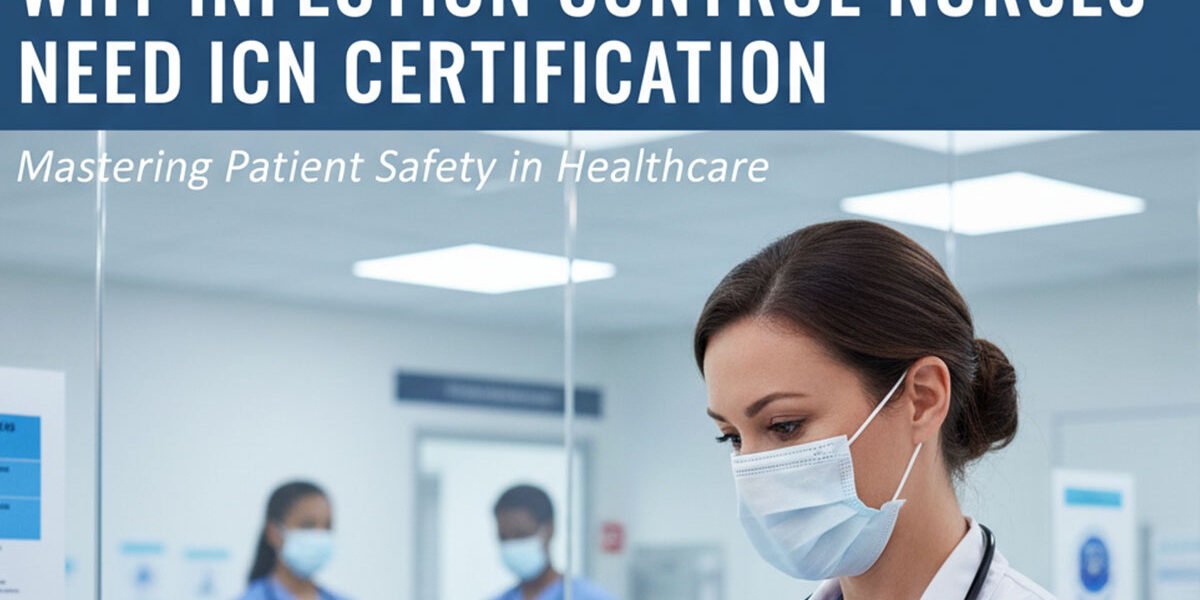
Infection control nurses play a critical role in preventing healthcare-associated infections, but many wonder if ICN certification is worth the investment. This certification can set you apart in a competitive field where expertise and credibility matter more than ever.
This guide is for infection control nurses considering certification, healthcare professionals wanting to specialize in infection prevention, and nursing leaders evaluating professional development options for their teams.
We’ll explore how ICN certification boosts your professional credibility and opens doors that might otherwise stay closed. You’ll also discover how this credential accelerates career advancement opportunities and helps you command higher salaries. Finally, we’ll cover how certified infection control nurses deliver stronger patient safety outcomes that make a real difference in healthcare settings.
Enhanced Professional Credibility and Recognition
Industry-wide acknowledgment of expertise
ICN certification serves as the gold standard in infection prevention, immediately signaling to employers and colleagues that you’ve mastered complex infection control principles. Healthcare organizations actively seek certified professionals because they recognize the rigorous training and ongoing education requirements. This certification transforms you from someone who works in infection prevention to a verified expert whose knowledge meets nationally recognized standards.
Increased trust from healthcare colleagues
When you walk into a room with ICN credentials, physicians, nurses, and administrators take notice. Your certification speaks before you do, establishing instant credibility that typically takes years to build. Colleagues feel confident consulting with you on challenging cases because they know your expertise has been independently validated. This trust translates into more meaningful collaborations and greater influence in patient care decisions.
Distinguished status among infection prevention professionals
ICN certification separates you from the general pool of infection prevention staff. You join an elite group of professionals who’ve demonstrated their commitment to excellence through formal testing and continuing education. This distinction becomes particularly valuable during job searches, promotions, and professional networking opportunities. Certified professionals often find themselves invited to speak at conferences, lead committees, and mentor newcomers to the field.
Validation of specialized knowledge and skills
Beyond the prestige, certification provides concrete validation of your technical competencies. You’ve proven your understanding of surveillance methods, outbreak investigation, antimicrobial stewardship, and regulatory requirements. This validation gives you confidence to tackle complex challenges and provides objective evidence of your capabilities when discussing career advancement or salary negotiations with management.
Why ICN Certification Is Essential for Infection Control Nurses
Infection Control Nurses play a critical role in preventing healthcare-associated infections (HAIs), protecting patients, healthcare workers, and the community at large. With rising concerns around hospital-acquired infections, antimicrobial resistance, and strict regulatory standards, ICN certification has become a professional necessity rather than an option.
At Global A1 Institute of Paramedical Science, the Infection Control Nurse (ICN) Certification is designed to equip nurses with in-depth knowledge and practical skills required to implement effective infection prevention and control programs. The course covers essential areas such as standard precautions, hand hygiene protocols, sterilization and disinfection, biomedical waste management, surveillance of infections, outbreak control, and audit & reporting systems.
Our ICN certification program is ISO certified and CPD approved, ensuring internationally accepted quality standards and recognized professional development credits. This certification not only enhances a nurse’s credibility but also improves employability in hospitals, nursing homes, diagnostic centers, and international healthcare facilities.
With doctor-led training, live online sessions, recorded lectures, real-life case discussions, and lifetime access to course material, Global A1 Institute makes it easy for working nurses to upgrade their skills without disrupting their duties. An ICN certification from Global A1 Institute empowers nurses to take leadership roles in infection control, ensure patient safety, meet accreditation requirements, and build a strong, future-ready nursing career.
Advanced Knowledge and Skill Development
Evidence-based infection prevention strategies
ICN certification transforms how infection control nurses approach prevention strategies by grounding their practice in solid research and proven methodologies. Certified nurses learn to critically evaluate scientific literature, identify high-quality studies, and translate research findings into practical interventions. This evidence-based approach replaces outdated practices with proven techniques that deliver measurable results in reducing healthcare-associated infections.
Latest research and best practices in the field
The certification program keeps nurses current with cutting-edge developments in infection control science. Participants gain access to the most recent studies on antimicrobial resistance patterns, emerging pathogens, and innovative prevention technologies. They learn about breakthrough approaches in environmental cleaning, sterilization techniques, and surveillance methods that are reshaping infection prevention protocols across healthcare facilities worldwide.
Comprehensive understanding of regulatory requirements
ICN certification provides deep knowledge of complex regulatory frameworks governing infection control practices. Nurses master requirements from organizations like CDC, CMS, OSHA, and The Joint Commission, understanding not just what the rules are but why they exist and how to implement them effectively. This comprehensive grasp of regulatory standards ensures compliance while optimizing patient safety outcomes and protecting healthcare organizations from costly violations.
Improved Career Advancement Opportunities
Higher salary potential and compensation packages
ICN certification opens doors to significantly higher compensation packages across healthcare settings. Certified infection control nurses typically earn 15-25% more than their non-certified counterparts, with specialized roles commanding premium salaries. Healthcare organizations recognize the value of certified professionals and often offer enhanced benefits, performance bonuses, and merit-based increases to retain top talent.
Access to leadership and management positions
Certification serves as a stepping stone to supervisory and executive roles within infection prevention departments. Many healthcare facilities require ICN credentials for director-level positions, quality assurance roles, and department leadership opportunities. The credential demonstrates readiness for strategic decision-making and program oversight responsibilities that shape organizational infection control policies.
Expanded job market and employment options
ICN certification dramatically broadens career possibilities beyond traditional hospital settings. Certified professionals find opportunities in consulting firms, pharmaceutical companies, medical device manufacturers, long-term care facilities, and government agencies. The credential translates across healthcare sectors, creating mobility between acute care, ambulatory settings, research institutions, and regulatory organizations.
Competitive advantage in hiring processes
Employers consistently prioritize ICN-certified candidates during recruitment, especially for specialized infection prevention roles. The certification signals commitment to professional excellence and validates expertise that hiring managers seek. Many job postings specifically require or strongly prefer certification, making it essential for accessing premier positions and standing out in competitive applicant pools.
Stronger Patient Safety Outcomes
Reduced Healthcare-Associated Infection Rates
ICN-certified nurses demonstrate measurably better infection prevention outcomes, with facilities employing certified professionals showing 15-30% lower HAI rates. Their specialized training in epidemiology and evidence-based practices directly translates to fewer catheter-associated urinary tract infections, central line bloodstream infections, and surgical site infections.
Enhanced Ability to Implement Effective Prevention Protocols
Certification equips nurses with advanced knowledge of antimicrobial stewardship, isolation precautions, and environmental controls. They can design and execute comprehensive infection prevention strategies, adapt protocols for emerging pathogens, and train staff on proper personal protective equipment use. This expertise becomes critical during outbreaks or when new infectious threats emerge.
Better Risk Assessment and Management Capabilities
Certified infection control nurses excel at identifying vulnerabilities before they become problems. They conduct thorough risk assessments, analyze infection trends, and implement targeted interventions. Their ability to interpret surveillance data and recognize patterns allows for proactive rather than reactive infection control measures, protecting both patients and healthcare workers.
Improved Compliance with Safety Standards
ICN certification ensures nurses stay current with CDC guidelines, Joint Commission requirements, and CMS regulations. They understand the regulatory landscape and can translate complex standards into actionable policies. This knowledge helps facilities maintain accreditation, avoid penalties, and create cultures of safety that permeate entire organizations.
Professional Network Expansion and Support
Access to exclusive professional communities
ICN certification opens doors to specialized professional organizations and online communities where certified infection control nurses connect, share experiences, and stay current with industry developments. These exclusive networks provide members-only resources, research updates, and discussion forums that aren’t available to the general nursing population.
Mentorship opportunities with certified peers
Certified infection control nurses gain access to structured mentorship programs and informal guidance relationships with experienced professionals in the field. These connections prove invaluable for career development, problem-solving complex infection control challenges, and navigating specialized roles within healthcare organizations.
Collaborative learning and knowledge sharing
Professional networks foster continuous education through peer-to-peer learning opportunities, case study discussions, and collaborative research projects. Members regularly share best practices, innovative solutions, and lessons learned from real-world infection control scenarios, creating a rich environment for professional growth and evidence-based practice development.
Getting your ICN certification isn’t just another credential to add to your resume – it’s a game-changer for infection control nurses who want to level up their careers. The certification boosts your professional reputation, deepens your expertise, opens doors to better job opportunities, helps you deliver safer patient care, and connects you with a supportive community of like-minded professionals. These benefits work together to create a solid foundation for long-term success in infection control.
If you’re serious about making a real impact in healthcare and advancing your career, pursuing ICN certification should be at the top of your priority list. The investment you make today in earning this credential will pay dividends for years to come, both for your professional growth and the patients you serve. Don’t wait – start exploring the certification process and take the next step toward becoming the infection control expert your healthcare team needs.
Dr. Sunil Saini is a distinguished orthopedic surgeon with expertise in cosmetic limb lengthening, deformity correction, and Ilizarov surgery. With a career spanning over two decades, he has made significant contributions to the field of orthopedics, particularly in advanced limb lengthening techniques.