What do paramedics do? Paramedics and emergency medical technicians help assess and care for people during medical emergencies. Depending on their training and local protocols, they may provide emergency support at the scene, monitor patients during transport and share important information with the hospital team.
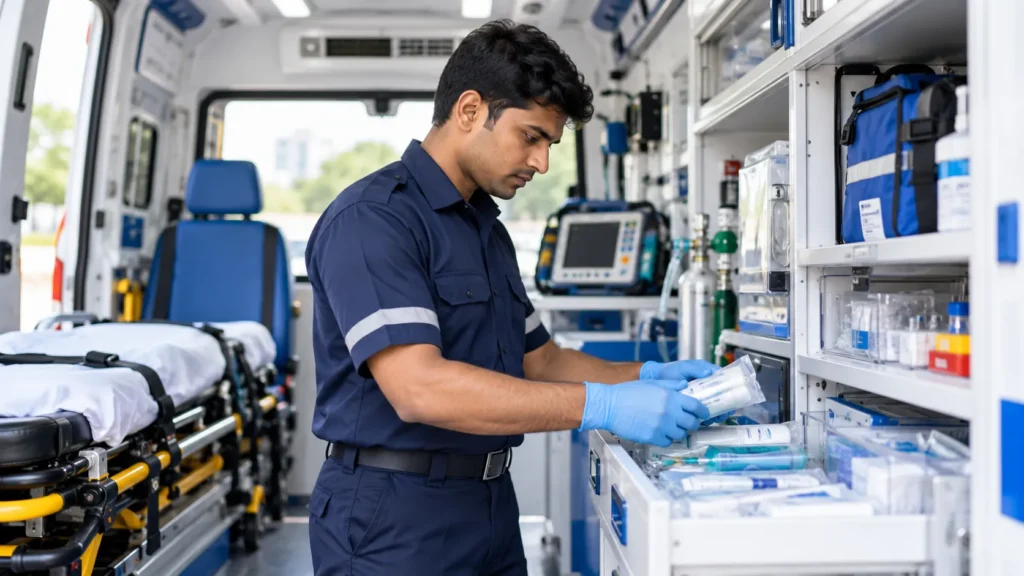
But there is more to the job than travelling in an ambulance. What do paramedics study? What do they wear? How do they move a patient safely? And how is a paramedic different from other healthcare professionals?
In this guide, we answer these questions and explain how students in India can begin exploring a career in emergency medical care.
What Does Paramedical Mean?
The word paramedical is often used in India as a broad term for healthcare services that support diagnosis, treatment, rehabilitation and patient care.
It may include work in medical laboratories, imaging departments, operation theatres, dialysis units and emergency services. You may also hear the term allied healthcare.
Paramedic usually refers more specifically to a professional trained in emergency medical care, often outside a hospital. In India, you may also see job titles such as Emergency Medical Technician (EMT) or Emergency Care Assistant.
Job titles, qualifications and responsibilities vary by employer and country. A laboratory technician, radiology technician and EMT do different jobs and need different training.
What Do Paramedical Services Mean?
Paramedical services are healthcare services that support the wider care team. Depending on the setting, these may include laboratory testing, medical imaging, emergency response, patient transport or assistance during clinical procedures.
For example, a laboratory professional helps provide information from patient samples, while an emergency medical technician supports patients before and during transport to a medical facility.
What Do Paramedics Do During an Emergency?
Emergency paramedics and EMTs respond to people who may be ill or injured. Their exact duties depend on their qualification, training, employer and local protocols.
Their work may include the following:
- Check the scene: Look for hazards and work with other emergency responders when needed.
- Assess the patient: Check the patient’s condition and identify urgent concerns within their training.
- Provide emergency support: Give appropriate care, such as first aid or resuscitation support, according to their training and protocols.
- Monitor the patient: Observe the patient’s condition and report changes during care or transport.
- Assist with safe movement: Use suitable equipment and team techniques to move the patient when needed.
- Communicate with the hospital: Share relevant information with the receiving healthcare team.
- Complete documentation: Record important details according to workplace requirements.
The Ministry of Health and Family Welfare’s Emergency Medical Technician training curriculum includes scene safety, emergency response, ambulance preparation, infection control, communication and safe patient transfer.
Do Paramedics Only Drive Ambulances?
No. Driving an ambulance and providing emergency medical care are different responsibilities. Some ambulance services may have dedicated drivers, while others may train certain staff for additional duties.
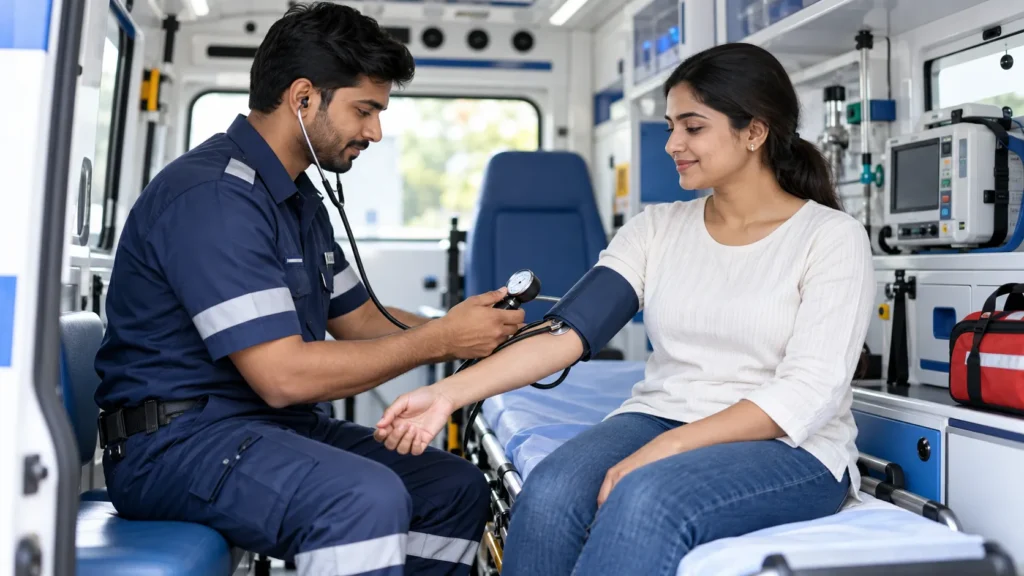
An EMT’s or paramedic’s role focuses on patient assessment, emergency support, safe transfer, monitoring and communication, within their training and workplace protocols.
Where Do Paramedics and EMTs Work?
Depending on their qualification and employer, emergency care professionals may work in:
- Ambulance and emergency medical services.
- Patient transport services.
- Hospital emergency departments.
- Event medical support teams.
- Industrial or workplace emergency response services.
The duties and staffing arrangements differ between organisations. Some roles involve shift work, including nights, weekends and public holidays.
What Do Paramedics Wear?
Paramedics and EMTs usually wear a uniform provided or approved by their employer. The design and colour vary between services, but clothing is generally chosen for comfort, visibility and safety.
Depending on the situation, their clothing or protective equipment may include:
- Uniform trousers and a shirt or jacket.
- Comfortable, protective footwear.
- A high-visibility jacket when working near traffic or at an incident scene.
- Gloves and other protective equipment when required.
- An identification badge.
Protective equipment should be selected according to the risk, the task and the organisation’s infection-control and safety policies.
What Do Paramedics Use to Transport Patients?
Ambulance teams use different equipment depending on the patient’s condition, the environment and the service’s protocols. Common examples include:
- Wheeled stretcher: Used to move a patient to and from an ambulance when appropriate.
- Carry chair: May help move a patient through narrow spaces or stairs when suitable.
- Transfer sheet or other lifting aid: May help trained staff transfer a patient between surfaces.
- Restraint straps: Used according to equipment instructions and safety procedures to secure a patient on a stretcher.
Choosing the right device depends on the patient and situation. Patient lifting and transfer should be performed by trained staff using appropriate techniques and assistance.
What Equipment Do Paramedics Use?
Ambulance equipment varies by vehicle, service and level of care. An emergency team may have access to:
- First-aid and wound-care supplies.
- A blood pressure monitor and pulse oximeter.
- Oxygen and breathing-support equipment.
- A defibrillator.
- Splints and other equipment for supporting injured limbs.
- Communication and patient documentation tools.
Use of equipment, medicines and procedures depends on the professional’s training, authorisation and local protocols. Not every ambulance carries the same equipment or provides the same level of care.
What Do Paramedics Study?
Emergency medical training combines healthcare knowledge with practical skills. Depending on the programme and qualification level, students may study:
- Basic anatomy and body systems.
- Patient assessment and vital signs.
- First aid and basic life support.
- Recognising medical and trauma emergencies.
- Scene safety and infection prevention.
- Safe patient movement and transport.
- Communication, documentation and professional behaviour.
- Ambulance equipment and workplace procedures.
Practical learning is important. Before joining a course, ask how much supervised skills practice, simulation and clinical or on-the-job training are included.
What Is the Difference Between a Paramedic and an EMT?
The difference depends on the country, employer and qualification framework. Generally, both work in emergency care, but their education, permitted responsibilities and levels of clinical training can differ.
In India, look at the exact job title and qualification requirements instead of assuming that all ambulance roles have the same scope. The Healthcare Sector Skill Council lists different emergency care qualifications, including Emergency Medical Technician–Basic and Emergency Care Assistant.
How Can You Start an Emergency Medical Career in India?
If emergency care interests you, follow these steps:
- Understand the role: Read job descriptions and learn what EMTs and emergency care assistants do.
- Check course eligibility: Confirm the required education, age and admission criteria for the specific programme.
- Verify the qualification: Ask who awards it and what recognition applies to that course.
- Ask about practical training: Check the supervised skills practice, simulation and clinical or on-the-job training offered.
- Review career requirements: Check employer requirements for the role you want to apply for.
You can explore related paramedical courses at Global A1 Institutes. For a broader comparison of options, read our guide to paramedical courses and career prospects.
What Do Paramedics Earn?
Paramedic and EMT salaries vary by job title, qualification, experience, employer, location and shift responsibilities. A trainee, an experienced EMT and a registered paramedic in another country may have very different pay.
If you are researching earnings in India, check recent job advertisements and official recruitment notices for the specific role. Look at whether the amount is monthly or annual and whether it includes allowances.
What Do Paramedics Make in Ontario, British Columbia or the UK?
Pay in Ontario, British Columbia and the UK differs by employer, experience, working hours and the level of the role. For a current figure, check the relevant ambulance service, employer job listing or official government source for that location.
Do not compare an overseas salary directly with an Indian salary without considering taxes, cost of living, currency and the qualifications or registration needed to work there.
Skills Needed to Work in Emergency Care
Emergency care involves more than technical knowledge. Useful skills include:
- Clear communication: Listening to patients and sharing information with the team.
- Calm decision-making: Following training and protocols in stressful situations.
- Teamwork: Working with ambulance colleagues, hospital staff and other responders.
- Compassion: Reassuring patients and families during difficult moments.
- Attention to safety: Checking hazards and using equipment correctly.
- Professional responsibility: Working within your training and asking for help when needed.
Questions to Ask Before Joining an EMT Course
- What is the exact qualification and who awards it?
- What are the current eligibility and admission requirements?
- How long is the course, and does the duration include practical training?
- Where will supervised practical or on-the-job training take place?
- Which skills will students practise and be assessed on?
- What are the complete fees, including examination and training charges?
- Which entry-level roles can I apply for after completing the course?
Request the answers in writing and verify the details with the awarding body where appropriate.
Frequently Asked Questions
Q. What do paramedics do?
Paramedics and EMTs support people during medical emergencies. Depending on their training and local protocols, they may assess patients, provide emergency care, assist with transport and communicate with the hospital team.
Q. What does paramedical mean?
In India, paramedical is often used as a broad term for healthcare roles that support diagnosis, treatment, rehabilitation or patient care. Emergency paramedics and EMTs are one part of this wider field.
Q. What do paramedics wear?
They usually wear an employer-approved uniform and protective footwear. Gloves, high-visibility clothing or other protective equipment may be used according to the situation and workplace safety policies.
Q. What do paramedics use to carry patients?
Ambulance teams may use a wheeled stretcher, carry chair, transfer sheet or other equipment. The choice depends on the patient, environment and the team’s training and protocols.
Q. What do paramedics study?
Training may include anatomy, patient assessment, first aid, basic life support, emergency response, safe patient transfer, infection prevention and communication. The syllabus depends on the programme and qualification level.
Q. Do paramedics need to be doctors?
No. Paramedics and EMTs follow their own education and training pathways. Their responsibilities are different from those of doctors and depend on their qualification and applicable rules.
Q. Can I become an EMT after 12th?
Some EMT training programmes may be open to eligible students after 12th. Requirements differ, so check the current admission criteria and recognition of the specific course before applying.
Q. What do paramedics earn in India?
There is no single salary for every paramedic or EMT. Pay varies by role, location, experience, employer and shift arrangements. Check recent job notices for a more relevant estimate.
Q. Can an Indian EMT work abroad?
It may be possible, but each country has its own qualification, registration, language and employment requirements. Check the official regulator and employer rules before planning your move.
Final Thoughts
Paramedics and EMTs support patients when timely care matters. Their work can involve assessment, emergency support, safe transport and communication with other healthcare professionals.
If you are interested in this career, learn about the actual responsibilities, choose a suitable qualification and look carefully at practical training. For guidance, explore Global A1 Institutes’ paramedical course options or contact the admissions team.
Paramedical course enquiries: +91 92536 01701
Trusted References
- Ministry of Health and Family Welfare: Emergency Medical Technician–Basic Training Curriculum
- Healthcare Sector Skill Council: Approved Qualifications
- Ministry of Health and Family Welfare: National Commission for Allied and Healthcare Professions Act
Note: Course eligibility, professional responsibilities, registration requirements and salaries can change. Confirm current details with the institute, awarding body, relevant authority and employer before applying.