India’s healthcare sector has moved firmly into a team-based delivery model. Hospitals no longer run on doctors alone – they depend on trained technicians, therapists, and administrators who keep diagnostics, surgeries, and patient care running every hour of the day.
This shift has created a wave of high-salary diploma courses that let students enter the workforce in one to two years, without the decade-long commitment of a medical degree.
For 12th-pass students, career-switchers, and working professionals looking to upskill, high-salary diploma courses in allied healthcare are now a realistic path to a stable income, fast job placement, and long-term growth.
Diagnostic chains, corporate hospital groups, and standalone clinics across NCR and other metros are hiring paramedical diploma holders aggressively – and many of these roles pay competitively with entry-level engineering jobs.
Below, we break down the five high-salary diploma courses dominating the 2026 healthcare job market, along with real salary ranges, job roles, and what makes each one worth considering.
What Makes a Diploma Course “High-Salary” in Healthcare?
Before comparing options, it helps to understand what actually drives pay in allied health careers. A few consistent factors decide whether a diploma leads to a high-salary outcome:
- Technical specialization – roles that require operating advanced machinery (MRI, dialysis units, cardiac monitors) pay more than general assistant roles.
- Scarcity of trained staff – fields with fewer skilled candidates than open positions command a wage premium.
- Hospital dependency – departments that generate direct revenue (radiology, OT, cardiac care) are prioritized in hospital budgets.
- City and hospital tier – metro cities like Gurgaon, Delhi, and Mumbai typically pay 20–40% more than smaller towns.
- Certifications and add-on skills – training in AI-assisted imaging, robotic-surgery assistance, or medical coding pushes salaries higher within the same diploma.
Keeping these factors in mind makes it easier to evaluate which high-salary diploma courses genuinely fit your interests and long-term goals.
Top 5 High-Salary Diploma Courses in 2026
1. Diploma in Radiology & Imaging Technology (DRIT)
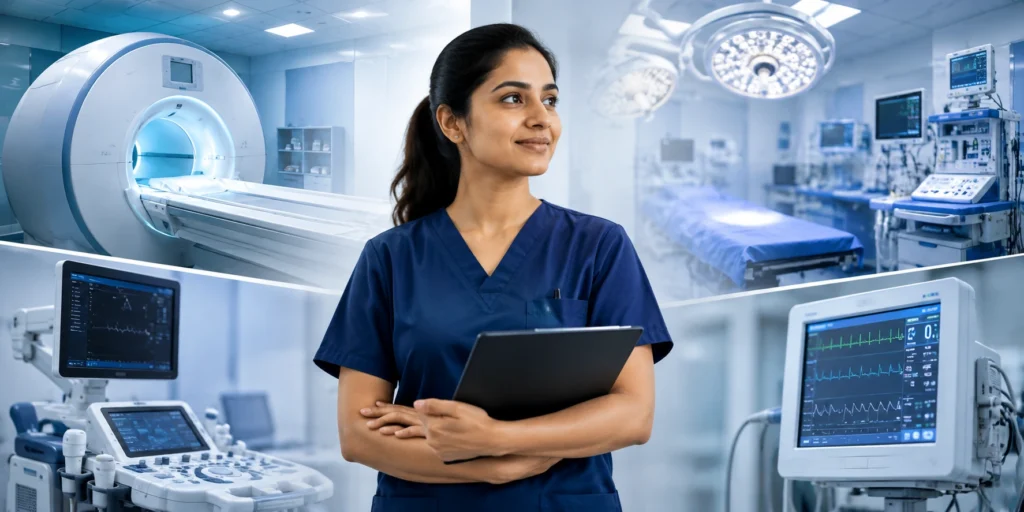
As hospitals adopt AI-integrated MRI systems and 3D CT scanning, the Radiology Technician role has become one of the more technical — and better paid – entry points in allied health.
The Role: Operating imaging equipment (X-ray, CT, MRI, ultrasound) to help doctors diagnose patients accurately. In 2026, many radiology technicians are also trained in imaging informatics, managing digital scan data for AI-assisted diagnostics.
Why It Pays Well: Every multi-specialty hospital and standalone diagnostic center needs round-the-clock imaging coverage, keeping demand consistently high.
2026 Salary Trend: Freshers in metro cities can expect roughly ₹25,000–₹40,000 per month, with experienced technicians specializing in MRI or interventional radiology earning ₹70,000–₹85,000+ per month.
This is consistently ranked among the highest-paying diploma courses after 12th, largely because imaging skills transfer well to specialty hospitals, cancer centers, and trauma units.
2. Diploma in Operation Theatre Technology (DOTT)
Surgical departments are among the biggest revenue generators for hospitals, which makes the Operation Theatre (OT) Technician a critical – and well-compensated – role.
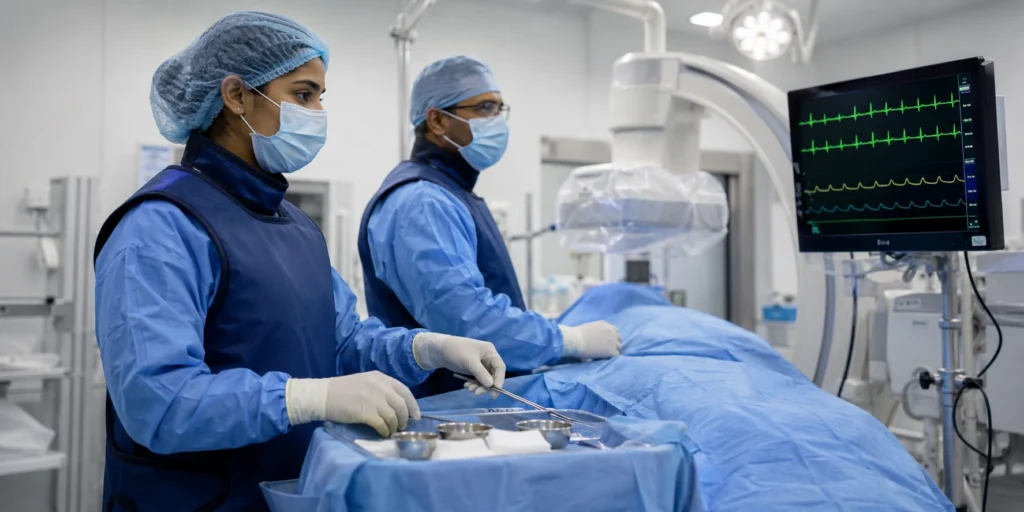
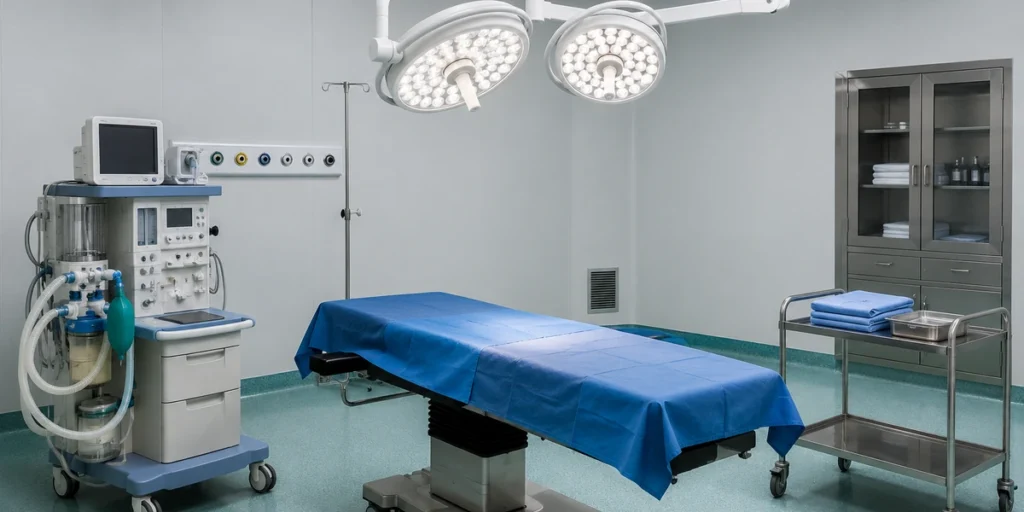
The Role: Preparing the OT, sterilizing instruments, managing anesthesia equipment, and directly assisting surgeons and anesthesiologists during procedures.
The 2026 Shift: With robotic-assisted surgery expanding in corporate hospitals, OT technicians are increasingly trained to support surgical robot systems, adding a valuable specialization to their diploma.
2026 Salary Trend: Salaries typically range from ₹22,000–₹55,000 per month, with corporate hospitals offering extra pay for night shifts and emergency on-call duty.
Because no surgery can proceed without a trained OT team, this remains one of the most in-demand high-salary diploma courses for students who want hands-on clinical exposure.
3. Diploma in Cardiac Care Technology (DCCT)
Cardiovascular disease continues to be a leading health concern in India, driving strong demand for technicians who can support cardiac monitoring and catheterization labs.
The Role: Monitoring heart rhythms, performing ECGs, assisting in angioplasty procedures, and managing life-support equipment during cardiac emergencies.
Why It Pays Well: This is high-stress, highly specialized work. Dedicated heart centers at major hospital chains hire cardiac care technicians on a priority basis.
2026 Salary Trend: This is often the highest-paying entry-level diploma among the five, with salaries ranging from roughly ₹28,000–₹65,000 per month depending on hospital tier and city.
Given the shortage of trained cardiac technicians relative to demand, this diploma consistently ranks among the top high-salary diploma courses for students comfortable in fast-paced, critical-care environments.
4. Diploma in Dialysis Technology (DDT)
With chronic kidney disease and diabetes on the rise, dialysis centers are expanding into nearly every city and suburb – and they need technicians with a very specific, in-demand skill set.
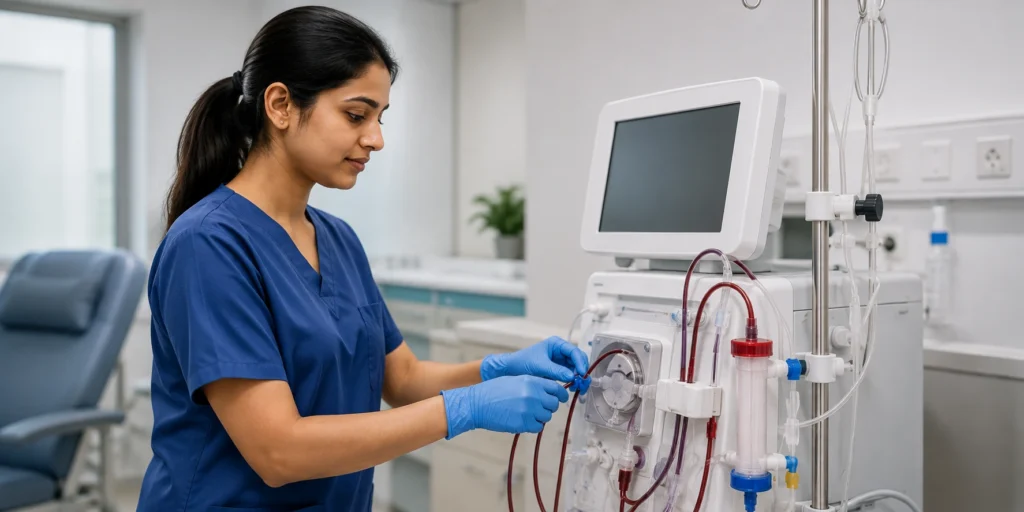
The Role: Operating hemodialysis machines, managing vascular access safely, and monitoring patients through multi-hour treatment cycles.
The 2026 Growth Driver: Specialized dialysis chains are expanding rapidly across India, creating consistent openings for trained technicians even in tier-2 cities.
2026 Salary Trend: Freshers typically start around ₹25,000 per month, but experienced dialysis technicians in private centers can move into packages of ₹6–8 lakh per annum over time.
Because dialysis technology has a narrower talent pool than general nursing support, it’s one of the more reliable high-salary diploma courses for long-term job security.
5. Diploma in Hospital Administration / Health Information Management
Not every well-paying healthcare role involves direct patient contact. As hospitals operate more like large corporate entities, the need for administrators who understand medical workflows, billing, and compliance has grown sharply.
The Role: Managing hospital operations, medical billing, insurance coordination, and healthcare data compliance.
The 2026 Edge: Programs now include training in medical coding and AI-assisted revenue intelligence, opening doors to remote roles with international insurance and health-tech companies.
2026 Salary Trend: Entry-level administrative roles in large hospitals start around ₹30,000 per month, while professionals who specialize in medical coding or insurance coordination can reach ₹80,000–₹1,00,000+ per month within a few years.
For students who prefer operations and data over clinical work, this is one of the most flexible high-salary diploma courses, with strong remote and international scope.
2026 Salary Comparison | High-Salary Diploma Courses at a Glance
| Diploma Course | Starting Salary (Monthly) | Experienced / Senior Salary |
|---|---|---|
| Radiology & Imaging (DRIT) | ₹25,000 – ₹40,000 | ₹70,000 – ₹85,000+ |
| Operation Theatre Technology (DOTT) | ₹22,000 – ₹35,000 | ₹55,000 – ₹60,000+ |
| Cardiac Care Technology (DCCT) | ₹28,000 – ₹45,000 | ₹65,000 – ₹75,000+ |
| Dialysis Technology (DDT) | ₹25,000 – ₹38,000 | ₹6 – ₹8 LPA |
| Hospital Administration | ₹30,000 – ₹45,000 | ₹80,000 – ₹1,00,000+ (Coding/IT roles) |
Note: Salary ranges are indicative 2026 estimates and vary by city, hospital tier, and years of experience.
How to Choose the Right High-Salary Diploma Course for You
With several strong options on the table, picking between high-salary diploma courses often comes down to personal fit rather than salary alone:
- Prefer technology and precision? Radiology & Imaging Technology offers a technical, machine-driven career path.
- Want to be in the middle of the action? Operation Theatre Technology and Cardiac Care Technology suit students who thrive in high-pressure clinical settings.
- Looking for steady, specialized demand? Dialysis Technology offers strong job security due to a narrow talent pool.
- More interested in operations than patient care? Hospital Administration and Health Information Management combine healthcare knowledge with business and data skills.
Whichever path you choose, enrolling with a recognized paramedical institute matters just as much as the course itself — accreditation, hospital-affiliated internships, and placement support directly affect starting salaries and job readiness.
Institutes like Global A1 Institutes offer industry-aligned paramedical diploma and certification programs designed around these exact high-demand roles, with practical, hospital-based training.
Conclusion
The healthcare job market in 2026 rewards specialization over generalist skills, and that shift has made high-salary diploma courses one of the fastest, most practical routes into a stable, well-paying career.
Whether it’s operating advanced imaging equipment, supporting life-saving surgeries, managing dialysis treatment, or running hospital operations, these five diploma paths offer real earning potential without the long timeline of a traditional medical degree.
Choosing the right high-salary diploma course, paired with training from a credible, hospital-affiliated institute, can set up graduates for strong placement outcomes right from year one.
Frequently Asked Questions
Q. Which diploma course has the highest salary in the medical field in 2026?
Among current high-salary diploma courses, Cardiac Care Technology and Radiology & Imaging Technology tend to offer the highest entry-level pay, with experienced professionals in both fields crossing ₹70,000 per month in metro hospitals.
Q. Do I need NEET to pursue these paramedical diploma courses?
No. Most paramedical diploma courses, including Radiology, OT Technology, Cardiac Care, and Dialysis Technology, do not require NEET. Admission is typically based on 10th or 12th-grade qualifications.
Q. How long do these high-salary diploma courses take to complete?
Most paramedical diplomas run for one to two years, followed by a short internship period, making them significantly faster than a medical degree.
Q. Are these diploma courses only useful in big cities?
No. While metro hospitals pay a premium, demand for trained technicians is growing steadily in tier-2 and tier-3 cities as diagnostic chains and dialysis centers expand nationally.
Q. Can I switch careers into healthcare through a diploma course?
Yes. Many high-salary diploma courses are designed for career-switchers and accept students directly after 12th or graduation in any stream, especially non-clinical options like Hospital Administration.